Exploration · first seen 17 Aug, updated 17 Aug
JWST found water-altered clay minerals on two of Neptune’s tiny inner moons and its rings that probably formed deep inside much larger icy worlds — compelling evidence that today’s moons may be rubble from Neptune’s original satellite system, destroyed when the captured moon Triton tore through it billions of years ago.
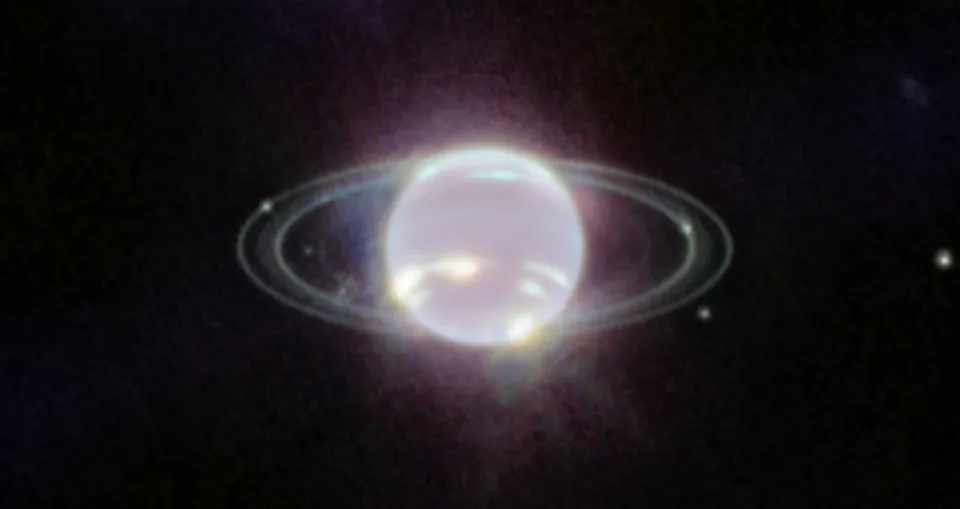
Webb found magnesium-rich phyllosilicates on Larissa, Galatea and Neptune’s rings, pointing to altered rock excavated from much larger ancient icy bodies. The post JWST found water-altered clay minerals on two of Neptune’s tiny inner moons…
Summary from SpaceDaily.